
Hydraulic Motor Guide: How It Works & How To Choose? | EMC, ISO 9001, and CE Certified Hydraulic Valves – CML’s Global Recognition
Many people are often confused by the differences between hydraulic pumps, motors (electric motors), and hydraulic motors. Although they are all related to power, their roles are quite different. The following will explain the relationship between hydraulic motors and the other two components. With many options available, the following content will provide a simple introduction to hydraulic motors, helping you understand the relationship between pressure, flow rate, and torque, so you can choose the most cost-effective solution. In 1981 Camel Precision Co.,Ltd was founded. The management of company fully awards of high quality products requires not only sophisticate machinery, But good knowledge in technology is also important as well. Company invited senior engineers from Germany and Japan to lead the manufacturing and training of local engineers in hydraulic industry. We offer our customers industrial pumps, solenoid directional control valves, hydraulic pumps, vane pumps, external gear pump, internal gear pump, directional valve, hydraulic valves...etc.
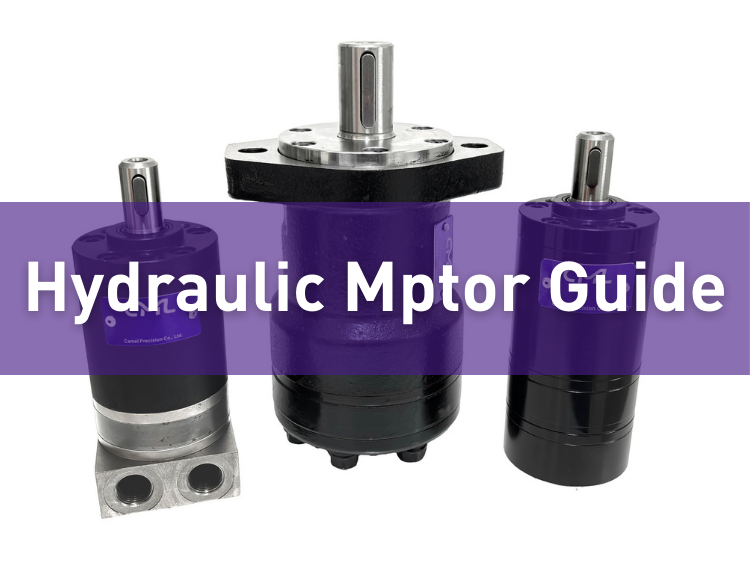
Hydraulic Motor Guide: How It Works & How To Choose?
Many people are often confused by the differences between hydraulic pumps, motors (electric motors), and hydraulic motors. Although they are all related to power, their roles are quite different. The following will explain the relationship between hydraulic motors and the other two components. With many options available, the following content will provide a simple introduction to hydraulic motors, helping you understand the relationship between pressure, flow rate, and torque, so you can choose the most cost-effective solution.
How Does a Hydraulic Motor Work?
Like hydraulic cylinders, hydraulic motors are essential components that transform fluid energy into mechanical energy. By utilizing the flow and pressure from a pump, they provide the necessary power to drive various types of machinery. When high-pressure fluid enters a hydraulic motor, it pushes internal parts like gears, vanes or pistons to rotate the output shaft and generate torque. While motors provide continuous rotation, hydraulic cylinders are used for linear operations, such as pushing and pulling.
What Are the Different Types of Hydraulic Motors?
Hydraulic motors are categorized into four primary types based on their construction: Orbital (Gerotor) motors, Axial Piston motors, Radial Piston motors (star-like shape), and Gear motors. The choice between these types depends on the specific requirements of your system, such as the desired speed, pressure range, and torque output.
Orbital Motors
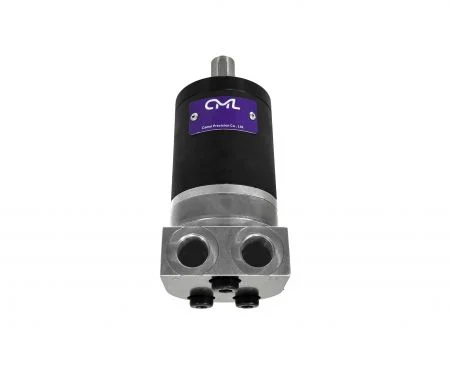
Orbital motors, such as the CML BMM, BMP, BMPH Series, operate on an internal planetary gear principle. The design consists of a fixed stator and a rotor with one less tooth. As high-pressure oil enters the motor, the pressure difference drives the rotor in an orbital motion within the stator. This mechanism makes orbital motors the premier choice for applications requiring high torque at low speeds.
Advantages: High starting torque, smooth low-speed operation, and direct drive of heavy objects without the need for a speed reducer (Gearbox).
Applications:Conveyor belts and automation equipment, Winches and hoisting systems, Agriculture, forestry, and fishery machinery, Logistics and material handling solutions, Construction and engineering vehicles, Wheel/track drive and cooling fan systems, Municipal and special-purpose vehicles.
For those seeking value, CML’s BMM Series Orbital Motors deliver exceptional quality at a competitive price. Ideal for low-speed, high-torque tasks and suitable for all the applications mentioned above, the BMM, BMP, BMPH Series ensure a perfect fit for your machinery.
Axial Piston Motors
Axial piston motors utilize pistons aligned with the output shaft to drive a swashplate, generating rotation. Known for their ability to handle high pressures (up to 350~450 bar) and high volumetric efficiency, these motors are highly responsive and offer impressive power density. They are the essential drive component for high-pressure, high-power applications like heavy-duty excavators and industrial injection molding equipment.
Radial Piston Motors
Radial piston motors feature pistons distributed in a radial pattern that move perpendicularly to the drive shaft. When hydraulic oil pushes the pistons against a waved cam ring, tangential forces are generated to produce rotation.
Due to its long internal stroke and large contact area, it can maintain extremely high torque output and smoothness at very low speeds (even below 1 RPM), and is commonly found in maritime winches, heavy lift cranes, and industrial machinery requiring extremely high starting torque.
Gear Motors
A gear motor consists of a pair of meshing drive and idler gears mounted within a robust housing. As high-pressure oil acts on the gear surfaces, it forces the gears to rotate in opposite directions.
Due to its straightforward design, this motor is lightweight, cost-effective, and offers a remarkably high tolerance to fluid contamination. While its efficiency and noise levels at high pressures may not match those of piston motors, its ease of maintenance and high-speed capability make it the ideal choice for fan drives, lawnmowers, and various low-to-medium pressure power assistance applications.
How to Choose the Suitable Hydraulic Motor?
Understanding the following factors will help you grasp the key points in selecting the suitable motor.
Pressure & Torque: Torque output depends directly on the system's input pressure.
When the motor displacement (oil consumption per revolution) is fixed, higher pressure results in greater output torque. However, we should also consider the following factors, which might affect the torque of a hydraulic motor:
Motor type: Different types of motors, such as gear, vane, and axial piston, have different efficiencies and torque characteristics.
Motor efficiency: The mechanical efficiency and volumetric efficiency of the motor determine the actual torque output.
Hydraulic oil viscosity: The viscosity of the hydraulic oil influences the internal friction of the motor, thus affecting the torque.
Temperature: The temperature of the hydraulic oil impacts its viscosity, thus influencing the motor's performance.
Flow & Speed: The flow rate (volume of oil per unit time) directly determines the motor's rotational speed.
With a fixed displacement, higher flow rates result in higher rotational speeds. It is important to note that insufficient flow can cause the motor to experience vibration or stick-slip.
Hydraulic Motor vs. Electric Motor vs. Pump: What’s the Difference?
In simple terms, energy transmission in a hydraulic system is a continuous conversion process. It begins with an electric motor (the power source) generating mechanical energy, which a hydraulic pump then converts into fluid power. The hydraulic valve assembly regulates the pressure, flow, and direction of this fluid to drive the hydraulic motor, which finally transforms the fluid power back into mechanical energy to produce rotational motion.
Despite their distinct roles, the electric motor, pump, and hydraulic motor are interconnected and indispensable components in the hydraulic system.
In search of the right hydraulic motor?
CML hydraulic motors deliver the stability your machinery needs through high efficiency, long service life, and low maintenance costs. By combining premium quality with a competitive price, we help customers maximize their product value. With decades of hydraulic expertise, CML provides professional solutions for complex system design to specialized application support. Get in touch with CML for a professional consultation tailored to your specific industrial needs.
- Related Products
-
- Files Download
-
Popular Products
 Download
 Hydraulic Motor Guide: How It Works & How To Choose? | CML: ISO 9001 & CE Certified Hydraulic Pump Manufacturer – Award-Winning Quality
Located in Taiwan since 1981, Camel Precision Co., Ltd. is a hydraulic pumps and hydraulic valves manufacturer in Machinery and Equipment Manufacturing Industry.
In 1981 Camel Precision Co.,Ltd was founded. The management of company fully awards of high quality products requires not only sophisticate machinery, But good knowledge in technology is also important as well. Company invited senior engineers from Germany and Japan to lead the manufacturing and training of local engineers in hydraulic industry. We offer our customers industrial pumps, solenoid directional control valves, hydraulic pumps, vane pumps, external gear pump, internal gear pump, directional valve, hydraulic valves...etc.
CML, Camel Hydraulic, Camel Precision has been offering customers high-quality Vane Pump, Variable Displacement Vane Pump, Internal Gear Pump, Eckerle Asia Agent, External Gear Pump, Solenoid Valve, Modular Valve, Pressure Reducing Valve, Flow Control Valve, Hydraulic Valve since 1981, both with advanced technology and 38 years of experience, CML, Camel Hydraulic, Camel Precision ensures each customer's demands are met.
Company Facts in Numbers
0
Years of industry experience
0
Number of clients served
0%
Customer repurchase rate